Pest control websites
Pest Control Website Design for Exterminators
Termites, rodents, ants, bed bugs, and recurring service plans. A fast, plain website that tells homeowners what you treat, where you work, and how to book an inspection.
What you get
Built for how people hire a pest control company
Crawlable WordPress pages
Real text for each pest and treatment, not a single bullet list.
Pest-by-pest pages
Termites, rodents, ants, roaches, bed bugs, mosquitoes, wildlife.
Built for phones
Most pest searches happen on a phone, often the same day.
Service-area page
The towns and counties your routes cover, stated plainly.
Plan vs. one-time paths
Recurring plans and one-time treatments explained separately.
Safety questions answered
Kids, pets, and prep steps, in plain words.
You handle the pests. We build the website.
Why it matters
What homeowners look for on a pest control website
Pest problems are urgent and a little embarrassing. Someone who just found droppings in the pantry or wings on the windowsill wants help this week, and they want a company that looks careful and professional. Most of them search on a phone, open two or three websites, and book with the one that answers their questions fastest.
The first screen has to say which pests you treat, which towns you cover, and how to book an inspection or a service visit. Below that, homeowners look for signs that you are a real, established local business: your name and the owner behind it, real photos of your trucks and technicians, and straightforward explanations instead of scare tactics.
The biggest question for most families is safety. Parents and pet owners want to know what will be applied, where, and what they need to do before and after the visit. A short, honest prep-and-safety section answers that before the call and makes the booking easier.
Service pages
Service pages built around real pest jobs
Termites. Explain inspections, the difference between subterranean and drywood termites in your area, the treatment options you actually offer, and what a homeowner should expect for follow-up visits. Termite work is a large decision, and a detailed page earns the inspection appointment.
Rodents. Cover inspection, exclusion (sealing entry points), trapping, and cleanup. Homeowners want to know the problem will not come back, so describe your exclusion work and follow-up in plain steps.
Bed bugs. Describe how you confirm an infestation, what prep the customer must do, how many visits it usually takes, and how you handle apartments or multi-unit buildings. This is a high-stress search, and calm, specific copy matters.
Recurring plans. Quarterly or monthly service is the backbone of most pest control businesses. A plan page should explain what each visit includes, which pests are covered, and how re-service calls work between visits, using your actual terms.
Seasonal pests such as mosquitoes, wasps, and stinging insects get their own pages before their season starts, so the pages are ready when the searches begin.
Template demo
What a pest control website looks like on a phone
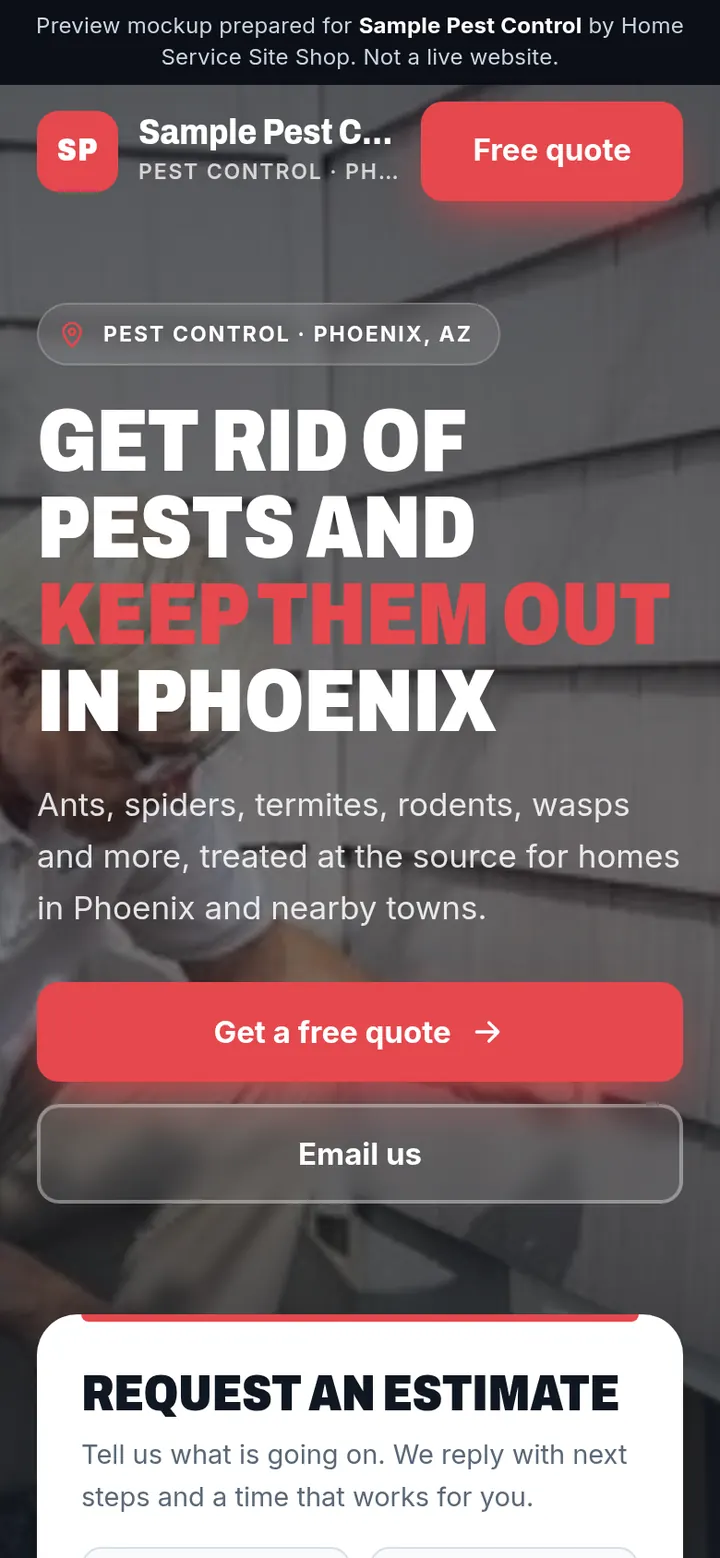
This is our pest control template shown with a fictional business. On a phone, the first screen shows the pests treated, the service area, and a clear button to request a visit. Service cards, the service-area section, and plain answers to common questions follow below.
For a real build we replace the sample text with your company name, your towns, your services, and photos of your own trucks and team.
Sample business, sample text. This is a template demo, not a client website.
Structure
Recurring plans, one-time jobs, and commercial work kept separate
A homeowner with a one-time wasp nest and a restaurant manager who needs monthly service and inspection logs are looking for very different things. When everything sits on one page, both have to dig. We give recurring residential plans, one-time treatments, and commercial accounts their own clear paths.
Your service area gets one honest page listing the towns and counties your routes cover. We do not create dozens of copy-paste city pages with only the town name changed; search engines treat those as doorway pages. Real local pages are added only where there is something real to say about that market.
Each page ends with one clear next step, such as requesting an inspection, asking a question, or starting a plan, and the contact button stays within reach on a small screen.
- A page per pest you want more calls for
- Separate recurring-plan and one-time treatment paths
- Prep and safety answers for families with kids and pets
- Real truck and technician photos instead of stock bugs
- Commercial page for restaurants, offices, and property managers
First screen
What the home page of a pest control website should say first
Lead with the pests that bring you the most calls in your area, such as scorpions, termites, rodents, or mosquitoes, instead of a generic “we kill bugs” headline. A visitor who sees their exact pest in the first line keeps reading.
Right under that, show the towns you cover and the next step: book an inspection, request a quote, or start a plan. If you offer a free inspection or a re-service promise, say so in your own exact terms. If you do not, leave it out. Honest, specific details beat broad claims.
How it works
Four steps to a working site
Choose a package
Stripe checkout.
Share your details
Services, towns, license info, and photos of your work.
We build the site
Plain, crawlable WordPress pages that work on phones.
Launch, then maintain
Maintenance and unlimited updates keep things current.
Trades
Other trades we build for
Contractor websites
General contractors, remodelers, and specialty trades.
See contractor websites →Plumber websites
Drains, water heaters, tankless, sewer, and repair pages.
See plumber websites →HVAC websites
AC repair, furnace, heat pump, and maintenance-plan pages.
See hvac websites →Roofing websites
Replacement, repair, storm damage, and material pages.
See roofing websites →Landscaping websites
Maintenance plans, design-build, hardscape, and seasonal pages.
See landscaping websites →Not sure which page fits your shop? Start with the home service website design overview or compare every package on plans & pricing. See also what a website really costs vs. Wix or Squarespace, plumber website cost, and electrician website cost.
FAQ
Straight answers
Do you do pest control?
No. Home Service Site Shop builds websites for pest control companies. You handle the inspections and treatments; we build the website.
How much does a pest control website cost?
Published prices: Starter $299, ~50-page full site $1,695, ~100-page site $2,575, or a free one-page build with no upfront fee. Each plan is $49/mo maintenance and unlimited updates after launch. A custom logo alone is $99.
What pages should a pest control website have?
A home page, a page for each pest or service you want more of (termites, rodents, bed bugs, general pests, mosquitoes), a recurring-plan page, a service-area page, an about section, and a clear way to request an inspection.
Can the site explain our service plans?
Yes. We write a plan page from the terms you give us: what each visit includes, which pests are covered, and how re-service calls work.
Will you write the safety and prep information?
We draft it from the products and steps you tell us you use, and you approve the final wording before launch.
Do you build websites for other trades?
Yes. See home service website design for plumbers, HVAC, electricians, roofers, cleaners, and more.
Get a pest control website that books inspections
Real service pages. Built for phones. Plain prices.
Questions? tradekitco13@gmail.com